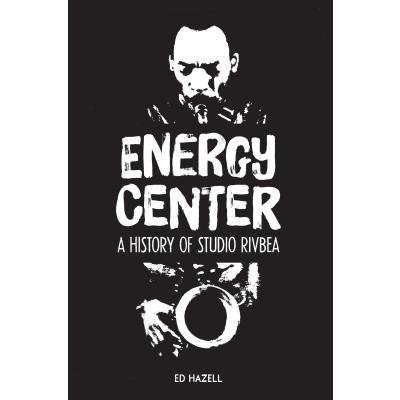
Featuring: Sam Rivers
NoBusiness Records is pleased to announce publication of author Ed Hazell’s Energy Center, a pioneering study of Studio Rivbea, the arts and music center operated by saxophonist-composer Sam Rivers and his wife Bea. Perhaps the best-known and most influential of the artist-run venues of the 1970s New York Loft Era, Rivbea introduced wider U.S. audiences to artists such as Julius Hemphill, David S. Ware, the classic Anthony Braxton quartet with Kenny Wheeler, David Murray, Jemeel Moondoc’s Muntu, the Melodic Art-tet, and many others. But Rivbea was more than a concert space. It was the Rivers family home; a rehearsal site for Sam’s orchestra; a music classroom, a platform for playwrights, poets, dancers, and filmmakers; and a community focal point for musicians in Lower Manhattan. The book delves into the details of how Sam and Bea raised a family while keeping all these activities going. It chronicles the many artistic triumphs that took place at 24 Bond St., while also examining some of the conflicts and battles that shaped the Studio Rivbea story. Energy Center places Studio Rivbea in the context of an era when Black musicians and artists fought for self-determination and control of their art, resisting commercial pressures in order to develop their art. The book also includes the most accurate and complete sessionography of events at Rivbea ever compiled. In addition, dozens of previously unpublished photographs and a selection of posters and other ephemera add vibrant visual highlights to the unfolding story. In short, Energy Center is the most comprehensive history of a remarkable and utterly unique place that helped make possible some of the most important music of the late 20th century.
Stewart Smith - THE WIRE
In late 1971 Sam Rivers and his wife Bea moved into 24 Bond Street, a Lower Manhattan building owned by painter and poet Virginia Admiral, the mother of Robert DeNiro. The saxophonist and his wife turned its basement and first floor into a living and rehearsal space, with students coming by for lessons and jam sessions. In a matter of months, Studio Rivbea also became a venue, hosting events for the New York Jazz Musicians’ Festival, a grassroots rival to the conservatively programmed Newport Jazz Festival, which had relocated to the Big Apple in 1972. Over several nights, Rivbea presented Archie Shepp, Noah Howard,
Rashied Ali, Clifford Jordan, The Melodic Art-Tet, Juice Omolade, Leon Thomas alongside River’s own trio; an amazing opening run that helped define the Loft Jazz movement. In recent years, our understanding of the Loft scene has been deepened by books such as Michael C. Heller’s Loft Jazz: Improvising New York in the 1970s (2016) and Vilnius label NoBusiness’s remarkable archival releases. Ed Hazell co-produced No Business’s Sam Rivers Archive and Live At Studio Rivbea series, penning detailed liner notes for each CD. Now he brings us Energy Centre: A History of Studio Rivbea, which includes an extended essay on the house the Rivers built, a sessionography, and a generous selection of photographs and flyers.
Hazel sets up the story with an overview of Rivers’ development from a bebopper in post-war Boston to a 1960s avant-gardist. Following an adventurous run of “inside-outside” albums for Blue Note, Rivers settled in New York in 1966, moving to a Harlem loft that he considered the first Studio Rivbea. Its name reflected, as Hazel writes, River’s ambitions as an educator and artist, but also his partnership with Bea. Hazel makes a point of acknowledging Bea’s tireless work to support her family and keep the Studio running. She also played a key role in her husband’s musical process, analysing and critiquing his work. Rivers deepened his connections with the New York avant-garde through his Harlem Ensemble, which could range from 15 to 35 members. Through this project, Hazel writes, Rivers articulated a “vision of avant-garde music that had high artistic and technical standards, a sense of heritage and community, and a determination to show the world that Black music was an inseparable part of American culture.” That vision was central to the programming at Rivbea, where he and Bea presented established figures like Jimmy Lyons and Dewey Redman, while nurturing emergent artists like Jemeel Moondoc, David S. Ware and William Parker. In addition to supporting local talent, they established strong links with the AACM in Chicago and Black Artists Group in St Louis.
Rivbea also held art exhibitions, film screenings, poetry readings and theatre, staging the first professional production of Ntozake Shange’s For Coloured Girls Who Have Considered Suicide When the Rainbow Is Enuf. In a perfect confluence of 1970s New York bohemia, Robert Mapplethorpe, who lived on the fourth
floor with Patti Smith, regularly attended concerts and photographed Rivers. All this took place in a space that attendees describe as closer to a family home than a formal venue, reflecting the Rivers’ aim of integrating art and everyday life. As saxophonist and producer Marty Khan puts it, “Rivbea had this vibe.” That vibe is evident in photographs by Osamu Konnu, Thierry Trombert and Raymond Ross, which depict musicians performing at floor level while audience members sit on cushions. The homemade feel extends to Rivbea’s mimeographed flyers, gloriously DIY collages of lettraset. illustrations and photographs. By 1977 fissures appeared in the Loft scene, personal, aesthetic and financial. Rivers was also moving on as an artist, with recording and touring taking up more of his time and energy. A basement flood in 1978 spelled the end for the Studio, with the family forced to find a new home. But as Hazel notes, Rivbea was not just a physical place and the Rivers continued to use the name in their creative endeavours. Energy Centre is testament to Rivbea’s vitality as an independent artist-run space and community hub, defined by its founders’ love for each other.